Author: Andrea McNally

Commentary: Prioritize community health workers

Posted on: May 14, 2026 | Last Updated: May 18, 2026
News articles

Texas’ announcement of $1.4 billion in federal funding to strengthen rural health care arrived at a critical moment. Rural clinics and hospitals continue to operate on thin margins, workforce shortages persist and residents across the state face widening gaps in access to care. But the Rural Texas Strong Plan aims to change that. And amid the many innovative approaches outlined in the plan, Texas recognizes and seeks to strengthen its brilliant advantage: a dedicated foundation of community health workers.

CHWs are uniquely positioned to improve access to care, support chronic disease management, improve pre- and postnatal support and healthy birth outcomes, strengthen prevention and telehealth adoption, and even stabilize the healthcare workforce — all priorities outlined in the state’s plan.

As we look at rural and border communities, residents face higher rates of chronic disease, maternal health challenges and unmet behavioral health needs. Paired with transportation barriers, limited broadband access, provider deserts, mistrust and workforce shortages, these challenges are complex and intertwined.

CHWs address all of this (and more!) — when they’re used correctly.

CHWs — also known as Promotores de Salud — are not nurses, social workers or clinicians. They are trusted community members trained to help individuals and families overcome hurdles so they can receive appropriate care. They know the community and its people because they’re from the community. They understand traditions, relationships and challenges — and, most importantly, they have the relationships to help their neighbors access quality care. The benefits of CHWs extend beyond rural communities: Every Texan gains when preventive care reduces avoidable emergencies and hospital overcrowding.

But when there aren’t enough CHWs, people don’t know where to turn; they often delay care until conditions worsen. That’s when costs rise, hospitals strain and outcomes suffer — for everyone.

On the other hand, studies demonstrate that CHW interventions can lead to improvements across the “triple aim” of health care: improved population health, improved patient experience and reduced costs. The answer is clear!

CHWs’ lived experience, local connections and hearts for service cannot be overstated. Investing in training, leadership development and clear career pathways increases the likelihood these assets stay in the community, strengthen partnerships and improve continuity of care and health outcomes.

The Rural Texas Strong plan presents a meaningful opportunity to build on Texas’ momentum. By investing in CHW recruitment, training and retention, the state can build a stronger CHW workforce, optimize systems and transform care.

Realizing the plan’s full potential will require collaboration across sectors.

MHP Salud invites local health systems, community-based organizations and regional partners to collaborate to expand our certified CHW workforce. With growing partnerships and proven CHW strategies throughout Texas, MHP Salud knows effective health solutions come from within the community, where trust already exists. Let’s drive home the results Texas needs — let’s prioritize the CHW workforce.

By: Dr. Magaly “Maggie” Dante

Viewpoint | Florida’s rural health crisis is costing more than it needs to

Posted on: April 17, 2026 | Last Updated: May 18, 2026
News articles, Featured

If I gave you a $3 return for every dollar you invested, would you take it?

Of course; who wouldn’t? That’s the minimum return on investment for every dollar invested in the community health worker workforce, an integral part of Florida’s health care system that is woefully underused, especially in our rural communities, where it’s needed most.

Florida has an unprecedented chance to change that now, and the decision will impact all of us. Through the Rural Health Transformation Program, the state will invest roughly $210 million annually for the next five years. The question is not whether we spend the money, but how wisely we invest it.

Today, our rural neighbors struggle to access health care, and the challenge is far deeper than provider shortages.

It’s the barriers that prevent people from seeking care in the first place — lack of transportation, inability to take time off work, language barriers, confusion navigating health and social services systems or simply not understanding when to seek help.

When those barriers go unaddressed, manageable conditions become emergencies. A missed appointment turns into an emergency department visit. A controllable chronic illness becomes an ambulance transport and hospitalization. And every one of those outcomes comes with a significantly higher price tag.

This is where community health workers offer a proven, cost-effective solution. They are trusted members of the communities they serve. They share traditions, language and neighborhoods with those they help. And their built-in trust and local experience positions them to effectively help people navigate red tape within the system, understand their diagnoses and care, and address real-life changes that determine whether care happens at all.

The financial impact is measurable.

Patients paired with a community health worker are 21% more likely to attend primary care visits and 18% more likely to use outpatient services — both far less expensive than emergency care or hospital stays. Clinical research also shows community health workers can cut hospital readmissions nearly in half, reducing rates from 24.5% to 12.6%. Each avoided readmission can save more than $15,000.

The return on investment is clear: For every $1 invested in community health worker programs, Medicaid can save up to $3. That’s because they prevent the most expensive outcomes directly impacting Tampa Bay.

When people in rural communities can’t access healthcare, patients don’t disappear. They arrive in Tampa Bay Area emergency rooms — sicker, later and far more expensive to treat. That reality drives longer wait times, strains already limited providers and increases costs that ripple across the entire health system.

Those costs don’t stay contained. They are passed through insurance premiums, higher hospital charges and taxpayer-funded care. Whether you live downtown, toward the beaches or in the countryside miles from the nearest hospital, the access gaps are coming for your pocket.

The most expensive care is the care that comes too late.

Investing in the community health workers is not a temporary fix. It’s infrastructure. They are integrated into health systems, improving efficiency while supporting long-term sustainability through better outcomes and lower costs.

Florida has a choice. We can continue paying for healthcare at its most expensive point — emergency rooms and hospital beds. Or we can invest upstream in community health workers, a workforce proven to improve health outcomes and lower financial burdens on all of us.

MHP Salud — a national leader with more than 40 years of experience developing, integrating and advancing these programs— is prepared to equip healthcare systems, nonprofits and other agencies with nationally recognized training, tools and leadership to build and support the state’s community health workforce.

But we can’t do it alone.

Strengthening Florida’s community health workforce will take shared commitment from those who believe in research-backed solutions rooted in prevention. It will take investment, partnership and support.

This is an invitation to stand with us. To partner, to invest and to help the most vulnerable in our community receive quality health support, access and care through a proven solution: community health care workers.

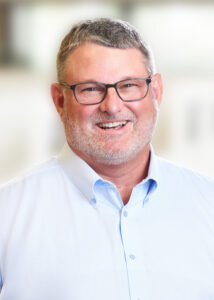
Headshot of CEO Maggie Dante

Dr. Maggie Dante is CEO of MHP Salud, a Florida-based nonprofit with more than 40 years of experience improving public health outcomes through community health work, including local health programs, care navigation and nationally recognized training and apprenticeship programs. Annually, more than 50% of Florida community health workers obtaining certification are trained by MHP Salud. She resides in Central Florida.

Mike Harp is a partner at Kapnick Insurance and serves on the MHP Salud board as finance chair. He resides in Southwest Florida.

Visit mhpsalud.org to learn more and connect today.

Transforming rural health with community health workers

Posted on: February 5, 2026 | Last Updated: May 18, 2026
Information Posts

Michigan’s announcement of $173 million in federal funding to strengthen rural health care is more than a budget headline – it’s a powerful affirmation of what the state has long understood: strong health systems are built by investing in people, partnerships and trust.
At MHP Salud, we applaud our state for focusing on proven solutions that bring results. Michigan has been a national leader in mobilizing Community Health Workers (CHWs) to improve access to health care and support rural communities. In fact, this led to MHP Salud’s founding more than 40 years ago in Southeast Michigan – to use CHW-led initiatives that address barriers so individuals in rural communities could receive health care. In 1983, we saw the impact of CHWs, and we’ve continued to drive this movement nationally through training, consultation and certification.
Our state’s plan to use rural transformation funding to invest in workforce development, technology and regional partnerships reflects what CHWs have demonstrated for decades: care is more effective when it’s coordinated, responsive and rooted in community.
Michigan’s focus on workforce development, specifically recruiting CHWs and formalizing state certification policies, is particularly important. In our rural communities, access is tough. Provider deserts, limited transportation, social barriers and trust, impact families’ ability to receive timely health care. It impacts their ability to navigate complex systems and medications, to adhere to treatment plans, and to manage chronic conditions.
CHWs address all of this (and more!) — when they’re used correctly.
CHWs are not nurses, social workers or clinicians. They are trusted community members trained to help individuals and families overcome hurdles so they can receive appropriate care. The benefits extend beyond rural communities: every Michigander gains when preventive care reduces avoidable emergencies and hospital overcrowding.
When CHWs are unavailable, people often delay care until conditions worsen. That’s when costs rise, hospitals strain and outcomes suffer – for everyone.
But it doesn’t have to get that far. With the rural transformation funding and Michigan’s strategic workforce investment, we can build healthy communities now.
Studies demonstrate that CHW interventions can lead to improvements across the “triple aim” of health care: improved population health, improved patient experience, and reduced costs.
Community Health Workers’ lived experience, local connections and hearts for service cannot be overstated. Investing in training, leadership development and clear career pathways increases the likelihood these assets stay in the community, strengthen partnerships, and improve continuity of care and health outcomes.
The Rural Health Transformation grant presents a meaningful opportunity to build on Michigan’s leadership. CHWs are uniquely positioned to support care coordination, telehealth adoption, behavioral health integration and chronic disease management – all priorities outlined in the state’s rural health plan.
Realizing the plan’s full potential will require collaboration across sectors.
With deep Michigan roots, MHP Salud invites local health systems, community-based organizations and regional partners to collaborate to expand our certified CHW workforce. Effective health solutions must come from within the community, and we are ready to help Michigan’s CHW workforce reach their full potential.
By: Dr. Magaly “Maggie” Dante

Community health workers are the ultimate mentors

Posted on: January 24, 2026 | Last Updated: May 18, 2026
Information Posts

Trust, especially when it comes to health, is an act of deep vulnerability. Particularly when you don’t feel like anyone else truly understands what you’re going through, where you’ve been or the hard knocks you’ve faced along the way.

I remember watching my mother struggle with her health, a painful path that might have looked very different if she had had a trusted peer to guide her — someone she could relate to and rely on. If only she had a Community Health Worker.

In the decades since my mother’s passing, I’ve devoted my career to helping others like my mom, individuals and families overwhelmed by the complexities of health care, yet hesitant to trust.

Community health workers (CHWs) bridge this gap, serving as the ultimate mentors for health and well-being, helping individuals and families navigate health and social service systems that are often confusing, overwhelming or feel out of reach.

CHWs are trusted members of the communities they serve. They often share the same language, culture, ZIP code and lived experiences as the people they support — making them uniquely qualified to walk alongside someone as a mentor for their health.

Like any great mentor, a CHW listens first — without judgement — and helps community members set realistic goals for themselves and their families, whether that means helping a senior understand better medication management, guiding a working parent through health insurance enrollment or connecting a family to food, housing or transportation resources that directly affect their health and quality of life.

With a strong foundation of trust, CHWs help people understand medical instructions, keep appointments and address social stressors. As a result, they reduce unnecessary emergency room visits and hospital readmissions.

As we recognize January as National Mentor Month, it is the perfect time to advocate for Community Health Workers and the impactful role they play in guiding health and well-being.

And beyond data and dollars is something immeasurably important: empowerment. Mentorship doesn’t just aim to solve today’s challenges but equips mentees for the future. CHWs help community members gain confidence to advocate for themselves, ask questions and make informed decisions about their health. With the much-needed support, individuals move from crisis-driven care to prevention and stability — a shift Florida desperately needs to thrive.

MHP Salud is committed to building, growing and supporting the CHW workforce throughout Florida. But we can’t do it alone.

Strengthening Florida’s Community Health Worker workforce means recognizing that for many families, a trusted mentor can make all the difference in how they experience health and care. It will take investment, partnership and support. This is a call to those who believe in the power of mentorship and thirst for a stronger, healthier Florida. Please join us.

By: Dr. Magaly “Maggie” Dante

Community health workers matter now more than ever

Posted on: January 16, 2026 | Last Updated: May 18, 2026
News articles

Across the Big Bend, we know what it means to look out for one another – checking on an elderly neighbor during hurricane season, bringing a meal to a friend after surgery or simply showing up when someone needs help. Some call it southern hospitality. I call it the spirit of community. That same spirit is the heart of one of Florida’s more effective – yet underutilized – health care solutions: Community Health Workers (CHWs).
Florida’s health care system is under real strain. Doctors and nurses are stretched thin. Costs are rising, our population is aging and, ultimately, these pressures will ripple through all of our lives.
When we look at our more rural communities, we risk strain at crisis proportions if we don’t address it now through proven solutions like CHWs.
Fortunately, there is hope. With Rural Transformation grant funding, Florida can significantly improve health care access and outcomes in our rural communities – benefitting everyone. To make this impact last, we must invest strategically in sustainable, people-centered solutions. That’s why strengthening the CHW workforce is essential, and we urge state leaders to support and fund these efforts.
CHWs are trusted members of the communities they serve. They understand local challenges because they live them. CHWs help neighbors navigate everyday barriers directly impacting health: nutrition and food insecurity, housing instability, transportation, health care access, language barriers, difficulty understanding medical instructions. When those needs go unmet, our communities pay the price. A missed follow-up appointment, a delayed screening or an unfilled prescription can quickly turn into an emergency room visit or hospital readmission, easily totaling $15,000+.
CHWs step in before a crisis, helping our neighbors stay on track, stay healthy and stay out of the hospital.
The impact is powerful. Patients feel supported instead of overwhelmed, health outcomes improve, health systems save money, and communities become stronger.
As a bonus, the CHW model provides employment opportunities where few exist – benefitting every taxpayer.
These professionals are so effective that the U.S. Bureau of Labor projects CHW employment will grow by 13 percent of the next decade, far outpacing average job growth.
This is a critical moment for Florida to invest in the CHW workforce. And with the Rural Transformation grant, it’s completely possible.
MHP Salud — a national leader with more than 40 years of experience developing, integrating and advancing CHW Programs — is prepared to equip healthcare systems, nonprofits and other agencies with nationally recognized training, tools and leadership to build and support the state’s CHW workforce.
But we can’t do it alone.
Strengthening Florida’s CHW workforce will take shared commitment from those who believe in research-backed solutions rooted in prevention. It will take investment, partnership and support.
This is an invitation to stand with us. To partner, to invest and to help the most vulnerable in our community receive quality health support, access and care through a proven solution: Community Health Workers. Together, we will build healthy communities throughout Florida. Visit https://mhpsalud.org/ to learn more and connect today.

By: Dr. Magaly “Maggie” Dante