For many hospitals, the work doesn’t end when a patient leaves the building.
Some of the most important factors affecting health outcomes happen after discharge, when patients try to navigate medications, follow-up appointments, transportation challenges, and recovery at home.
Without adequate support, patients are more likely to experience complications that can lead to preventable hospital readmissions.
These readmissions are costly for both patients and healthcare systems.
Community Health Workers (CHWs) are helping hospitals improve transitions of care by providing trusted, community-based support that keeps patients connected, informed, and engaged after discharge.
The High Cost of Readmissions
Hospital readmissions remain a major challenge across healthcare.
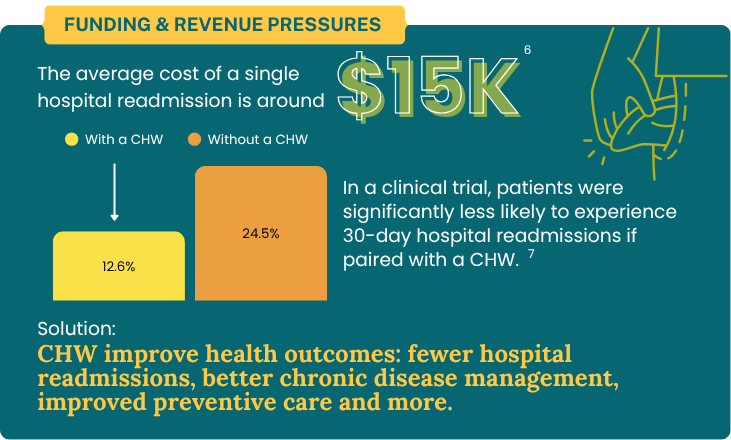
The average cost of a single hospital readmission can reach thousands of dollars, while frequent readmissions can negatively affect both patient outcomes and organizational performance metrics.
Patients recovering from hospitalization may face barriers such as:
- Difficulty understanding discharge instructions
- Limited access to transportation
- Challenges obtaining medications
- Food or housing insecurity
- Lack of social support
- Confusion navigating follow-up care
Even when high-quality clinical care is provided during hospitalization, patients can still struggle once they return home.
CHWs Help Bridge the Gap
Community Health Workers help patients navigate the transition from hospital to home by providing practical, person-centered support.
CHWs often assist patients with:
- Understanding care plans
- Scheduling and attending follow-up appointments
- Medication education and adherence
- Accessing community resources
- Addressing barriers related to transportation or technology
- Providing ongoing encouragement and support
Because CHWs are trusted members of the communities they serve, they can build relationships that improve communication and patient engagement.
This support can make a significant difference in helping patients successfully manage recovery after discharge.
Evidence Shows Strong Results
Research continues to demonstrate the impact CHWs can have on reducing readmissions and improving outcomes.
In a Massachusetts General Hospital clinical trial highlighted by Harvard University, patients paired with Community Health Workers were significantly less likely to experience 30-day hospital readmissions compared to patients who did not receive CHW support.
The study showed that personalized guidance, trust-building, and community-based support helped patients better navigate recovery and ongoing care needs.
For healthcare systems, these improvements support both patient well-being and broader organizational goals tied to quality outcomes and value-based care.
Improving Outcomes Beyond the Hospital
Reducing readmissions requires more than discharge paperwork and follow-up calls.
Patients often need support navigating the real-world challenges that affect their ability to recover and stay healthy.
CHWs help healthcare organizations extend care beyond clinical walls by creating stronger connections between hospitals, patients, and communities.
This approach supports:
- Better chronic disease management
- Improved preventive care
- Stronger patient engagement
- Increased care continuity
- Reduced avoidable utilization
A More Connected Future for Healthcare
As hospitals work to improve outcomes while managing financial and staffing pressures, Community Health Workers offer a proven strategy for strengthening transitions of care.
By helping patients stay connected and supported after discharge, CHWs contribute to healthier communities and more sustainable healthcare systems.
At MHP Salud, we support organizations through CHW workforce development, training, and strategies that strengthen patient-centered care and improve long-term outcomes. If you’re ready to strengthen your workforce, email us today at info@mhpsalud.org.
References