Healthcare organizations across the country are navigating a difficult financial reality.
Operating costs continue to rise while hospitals and health clinics face increasing pressure to improve outcomes, reduce avoidable utilization, and deliver more efficient care.
From staffing expenses to medical supplies and chronic disease management, the cost of healthcare continues climbing — and many health systems are searching for sustainable solutions.
One of the most effective strategies may start outside the hospital walls.
Community Health Workers (CHWs) help healthcare organizations reduce avoidable costs by connecting patients to preventive care, community resources, and ongoing support before health challenges become crises.
Rising Costs Are Reshaping Healthcare
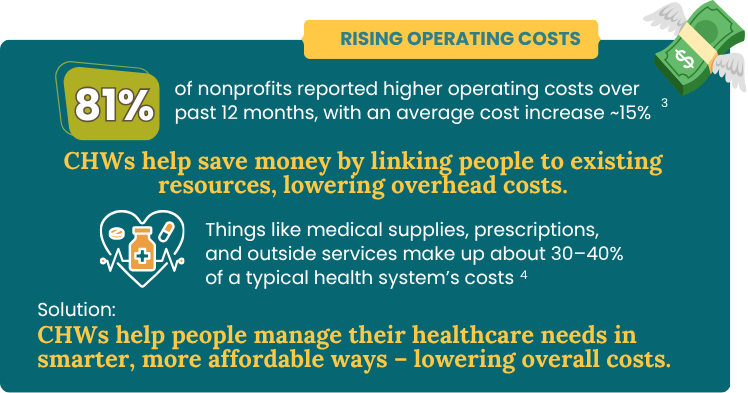
Recent nonprofit and healthcare surveys show organizations continue to experience increased operational costs across nearly every area of service delivery.
Healthcare systems are also managing rising expenses tied to:
- Medical supplies
- Prescriptions
- Emergency department utilization
- Hospital readmissions
- Chronic disease complications
- Staffing shortages and overtime
At the same time, many patients face growing barriers to accessing care consistently and affordably.
When patients delay care or struggle to manage chronic conditions, healthcare systems often see higher rates of:
- Emergency department visits
- Preventable hospitalizations
- Missed appointments
- Medication nonadherence
- Poor long-term health outcomes
These challenges create both financial and operational strain.
CHWs Help Prevent Costly Gaps in Care
Community Health Workers help patients navigate healthcare systems more effectively while addressing barriers that can contribute to avoidable healthcare utilization.
CHWs often support patients by:
- Connecting them to existing community resources
- Helping coordinate appointments and follow-up care
- Providing person-centered health education
- Assisting with medication understanding
- Supporting chronic disease self-management
- Helping patients access transportation, food, housing, or financial assistance resources
By helping patients stay engaged in care earlier and more consistently, CHWs can help reduce costly downstream complications.
This approach benefits both patients and healthcare systems.
Smarter, Community-Based Care
Many healthcare costs are driven not only by medical treatment itself, but also by the challenges patients face managing care outside clinical settings.
Patients may struggle with:
- Understanding discharge instructions
- Navigating insurance systems
- Accessing transportation
- Using digital health tools
- Managing multiple chronic conditions
- Finding affordable services and support
CHWs serve as trusted guides who help patients navigate these challenges while strengthening communication between providers and communities.
This kind of proactive support can improve care coordination and reduce unnecessary utilization.
Investing in Long-Term Sustainability
As healthcare organizations continue shifting toward value-based care models, prevention and community-based support are becoming increasingly important.
Hospitals and health systems are recognizing that improving outcomes often requires addressing social and behavioral factors that influence health long before a patient enters the emergency department.
CHWs play an important role in this work by helping patients access care earlier, stay connected to services, and manage health needs more effectively.
The result is a more coordinated, patient-centered approach that supports healthier communities while helping organizations manage rising operational costs.
Looking Ahead
Healthcare systems are under growing pressure to improve efficiency without sacrificing patient care.
Community Health Workers offer a practical, evidence-based strategy for reducing avoidable costs while strengthening patient support and engagement.
At MHP Salud, we work with organizations to strengthen CHW workforce development and build sustainable programs that improve care coordination, patient outcomes, and community health. If you’re ready to strengthen your workforce, email us today at info@mhpsalud.org.
References