Read the full article as originally published by American Federation of Teachers: https://www.aft.org/hc/spring2025/dante
Community health workers (CHWs) are critical members of the public health workforce, connecting communities with health and social resources and improving the quality and cultural competence of service delivery. To learn more about how CHWs increase access to care among vulnerable populations and improve public health and well-being, we spoke with Magaly “Maggie” Dante, PhD, LMHC, who is the CEO of MHP Salud, a nonprofit that works nationally to increase access to healthcare and social services.
–EDITORS
EDITORS: Let’s start with a definition. What is a community health worker?
MAGGIE DANTE: A community health worker (CHW) is a public health professional who is trusted by and knowledgeable about the communities they serve—typically marginalized communities that experience significant health challenges. At MHP Salud, we work primarily with Hispanic clients in Texas and Florida; the majority of our clients have at most a high school education and earn less than $14,000 per year.
CHWs often have grown up in the communities they serve, sharing the same ethnicity, culture, language, and experiences. They understand the social drivers of health at play for their neighbors, from housing instability to food insecurity or economic struggle, and the best ways to reach and educate them. They have the trust of their community, so they are often the bridge to health and social services and can act as cultural mediators.
CHWs provide a range of services, including outreach, home visits, health education, and person-centered counseling and care management. They support clients in accessing high-quality health and social services. They facilitate support groups and help communities organize and advocate for social change to advance the community’s health and welfare. They also advocate for their clients and help them understand the health information they receive, including why they should take their medications and the benefits of taking care of themselves, such as eating well and engaging in physical activity.
EDITORS: How did you get involved with community health work, and why is it so important to you?
MAGGIE: I’m a licensed mental health counselor; when I first got started, I was sent to rural, primarily Spanish-speaking communities in Florida where I was the only Spanish-speaking clinician. My job was to make sure pregnant women were doing their follow-ups and taking care of themselves, but I soon realized the depths of my patients’ needs. I once had a client who was 21, HIV-positive, pregnant, and living on public assistance. I had come to help with prenatal care, but she couldn’t keep the lights on or pay the rent, had no one to help care for her child, and didn’t know what to do. Getting her regular checkups wouldn’t address any of those problems. I learned a lot in those early years about education and advocacy, and about the need for more services.
Another experience that drew me to community health work was serving as a hospital administrator. I was very frustrated with the revolving door of patients who kept ending up back in the hospital because they didn’t know how to follow up with care after discharge. I would have given anything for a CHW back then. The clinicians had their jobs to do, and I didn’t have anyone I could ask to follow up with a patient who had been to the hospital six times in six months to figure out what we could do to help, whether it was medication education, transportation to appointments, or something else. I would have really appreciated having someone who knew enough about the community to make those connections.
I never lose sight of where I came from, as a Latina who grew up not knowing that we were poor but seeing that everyone didn’t have what they needed. Now, I have the ability to make change. I understand the benefits of CHWs and work to educate others about why they’re needed. It’s not just about a return on investment—it’s about investing in people so we can build healthy communities.
EDITORS: How do CHWs promote wellness and increase access to healthcare?
MAGGIE: Health disparities and access challenges are particularly evident among vulnerable and underserved communities. At MHP Salud, we define “vulnerable populations” as those at higher risk for poor health outcomes due to socioeconomic status, disability, age, gender, ethnicity, race, or geographic location.
Among the 67 counties we serve in Texas, there are rural areas with little to no access to healthcare. That may be because there is only one health center in the area or because there is no public transportation. We also have serious concerns about our older adults. We want to see them successfully age in their homes with proper support, but many older adults are isolated and unaware of what assistance may be available to them. That’s where CHWs come in.
The availability of care—the geographic proximity of healthcare providers and facilities capable of meeting the needs of a local population1—makes a significant difference in health outcomes. In Florida, almost every county has a health professional shortage area designation for primary care by the Health Resources and Services Administration (HRSA);2 the shortages for dental care and mental health are nearly as dismal.3 In Texas, the shortages are even worse for rural and border communities, where there are longer travel times to reach clinicians, few public transportation options, and higher numbers of elderly residents with complex health needs.
While CHWs can’t replace clinicians, they can strategically respond to these challenges and make vital contributions to healthcare teams by enhancing quality, facilitating care coordination, alleviating clinicians’ burdens, and fostering trust among patients. We work closely with the National Association of Community Health Centers (NACHC) and with HRSA to identify opportunities to add CHWs to multidisciplinary teams so we can address key gaps and burdens in public health and improve outcomes overall.
Another, perhaps less talked about, access challenge is trust in the healthcare system. Often, vulnerable populations are uncomfortable seeking care because they have had an unfortunate experience in the past or because language and cultural differences cause uneasiness and perpetuate distrust. We all know how complex healthcare can be—imagine trying to navigate it in a different language. Because CHWs are part of and trusted by their communities, they are instrumental in helping underserved populations proactively seek necessary healthcare, including preventive care. Moreover, CHWs have an intricate understanding of the resources in their communities, and they have an uncanny ability to navigate them. If transportation is an access challenge, for instance, they will advocate and network and find a solution.
As a result of the contributions of CHWs, clients and communities receive vital health education and skills, and they increase confidence in their ability to manage health conditions and advocate for themselves. In addition to being the trusted connector in communities, CHWs can deliver direct services—ensuring culturally competent approaches, which leads to better outcomes. Most importantly, the work of CHWs reduces persistent health inequities among different communities.4
EDITORS: What makes CHWs so effective?
MAGGIE: CHWs’ lived experiences greatly enrich the quality and impact of their work. They allow for a deeper connection with the community and facilitate culturally competent care, which contributes to the overall effectiveness of public health initiatives, like dissemination of information about COVID-19,5 vaccines,6 and diabetes education and prevention.7 CHWs accomplish this in part by embracing their roles as storytellers, advisors, and community partners, bringing a special understanding and empathy to their work.
Let me give you an example. We had one young man who reached out for help with applying for food stamps. Our CHW spent time getting to know him and learned he didn’t have health insurance—he couldn’t afford it and thought that he didn’t really need it because he was young and healthy. Our CHW kept the conversation open, and several months later she caught him as he was leaving to take his dog to the vet for an annual checkup. She told him, “Your health is just as important. If you don’t take care of your health, who will be there to take care of your dog?” Believe it or not, that’s what resonated. He finally agreed to accept help to obtain insurance. Within days of receiving it, he found out his blood sugar level was off the charts, and he was eventually diagnosed with diabetes. That wouldn’t have happened without that CHW building trust and really knowing that client and his community so she could educate him about what was available to him.
EDITORS: What are the benefits of implementing CHWs as a model for community wellness promotion?
MAGGIE: In hospitals and clinics, CHWs can alleviate some of the burden of overworked clinicians. We worked with an organization that hired two CHWs (from a college with an HRSA grant for CHW training) to help in their dental practice. The CHWs met with clients and explained certain procedures and treatments to them. That’s a benefit for both patients and staff—the patients don’t feel like they’ve gotten shortchanged by an overbooked clinician and can get their questions answered, and the clinicians can offload some of the work they don’t have time to do, knowing patients are in good hands.
The financial benefits for the organization and for public health are a natural outgrowth of CHWs’ work. As they build relationships and help meet clients’ needs, CHWs can begin conversations about health insurance and help them enroll in the right plan so they can access healthcare. They can also educate clients about being proactive with preventive care and taking screenings seriously. These things can have dramatic effects on the financial return on investment for a health system.8
What’s more, CHWs help sustain the business of a health system. If you operate a health center, your business model depends on people showing up to receive services. If you invest in CHWs, then they’re out in the community talking about the services you provide, touting your excellent customer service, and extending the personal trust they’ve earned into organizational trust. They are the start of that chain reaction that leads happy clients to tell others in the community about you.
EDITORS: What about challenges to implementation?
MAGGIE: The biggest challenge is funding. Much of the funding for CHW positions is temporary. For example, many hospitals and clinics hired CHWs to help with vaccination uptake and community outreach during COVID-19. But when that money was gone, the positions disappeared. So while we’re advocating for persistent funding, we also have to be creative about what kinds of roles CHWs can perform. MHP Salud has an evidence-based model called Parents as Teachers that we implement in several counties in Texas. It’s led by trained parent educators who make referrals, do outreach and case management, and help connect clients to services. We found a way to apply for contracts that aren’t CHW-specific but are still aligned with our work and our values.
When it comes to direct hiring, the challenges are twofold. First, we have to demonstrate to hospitals and clinics that CHWs are a terrific investment. Employers often cite a lack of funding for new positions, but chronic understaffing affects workplace safety and staff well-being. Replacing people who leave because of overwork and burnout takes a lot of time and money—and it certainly affects patient outcomes.9 That money could be invested in salaries and support—like CHWs—so staff don’t leave in the first place. If hospital administrators just looked at the numbers, they’d realize it’s a lot less expensive to hire CHWs (not to mention clinicians and other understaffed roles).
That leads to the second challenge: organizations need to be trustworthy. Before a CHW can advocate for you, they need to trust you—and that comes from organizational culture, starting with an intentional focus on hiring, retention, and support.
Let me give you an example from MHP Salud. About five years ago, our turnover was 47 percent annually. When I came in, I knew something had to change. As I dug in and talked to people, it quickly became clear that we had a culture issue. We conducted our first-ever employee survey, and the responses were overwhelming. We received pages and pages of feedback. Our staff at all levels expressed their distrust of management and the organization because they felt unsupported and disposable. Many staff members told us they didn’t have a good work-life balance, and it was leading to health issues, mental health concerns, and physical ailments. They felt management didn’t understand their workload or the toll it took on them, as they experienced secondary trauma—almost internalizing the deep challenges of our clients. So, for the first two years, we focused heavily on workplace culture and our hiring and retention practices. MHP Salud now implements a trauma-informed approach to supporting and retaining CHWs. In practice, that means we foster a learning and growth environment with reflective practice in our supervision. We create individualized development plans and prioritize meaningful one-on-one meetings with our team members. And we listen. While it sounds simple, that’s one of the hardest elements to put into practice day in and day out.
Today, MHP Salud has an 11 percent turnover rate, which is saving us nearly $1 million a year—money that can continue to go right into services. But what’s especially telling is that the quality of work has improved. Our CHWs are excited to be out there, and clients feel the difference. More than 90 percent of our clients come to us through word of mouth—recommendation of a friend or family member, a referral by a partner organization, or because they met a CHW out in the community. That financial and social return on investment can lead to significant public health return on investment too.
All of this takes work and intentionality, and that can be a big ask in the profit-driven healthcare industry. But to truly focus on the bottom line, employers must prioritize culture and staff support. The return on investment that’s possible with CHWs is second to none; in addition to improving employee retention and health outcomes, the financial return on investment will be evident in the bottom line. It works together, and CHWs are the bridge connecting it all.
EDITORS: How can organizations partner with CHWs?
MAGGIE: We work with organizations throughout the country to help them implement, improve, and sustain their own CHW programs. A few years ago, we received funding to create our own training and apprenticeship program, which enables us to prepare and then place CHWs in apprenticeships with partner health organizations. We are always looking for partners for our apprenticeship program, and for healthcare entities and community organizations interested in improving public health outcomes through CHW models. Just as important, we believe in partnering with our communities. Their voices are crucial in helping us understand service gaps and finding solutions to improve access to care and services.
On the industry level, federally qualified health centers receive training and assistance on all aspects of running a health center from their parent association, NACHC. We also belong to the National Training and Technical Assistance Partners group, which supports health centers. We educate health centers on the benefits of the CHW model and how they can incorporate CHWs into their multidisciplinary teams. We also work with hospitals, local nonprofits, and other businesses on infusing CHWs into their work.
Most states have a state association for CHWs, as well as local branches. Many states also have a voluntary CHW certification process, along with a fully functional association that supports the work of CHWs. Any organization that partners with CHWs will have a wealth of support available to help them improve outcomes.
EDITORS: What additional challenges do you expect from the Trump administration?
MAGGIE: The challenges we’re working to address are always going to be there. There’s a real fear among vulnerable populations when it comes to seeking help, and it’s only compounded by cultural and language differences. Unfortunately, this means that fewer people access care, especially preventive care that we know can detect life-threatening illnesses.
When fewer people access care, it costs us all a lot more in the long run because there’s an increase in invasive procedures versus preventive procedures. Insured or otherwise, naturalized citizens or otherwise, some people just won’t choose preventive care now because there’s fear and distrust of the system.
As fear and uncertainty increase, it becomes even more important for hospitals and healthcare workers to build trust with patients and communities. So if your hospital staff lacks appropriate training in how to make vulnerable patients feel safe, you’re going to have to do some work on your culture. We’ve had far too many clients tell us they felt rushed, disrespected, or treated like second-class citizens, perhaps because of race or ethnicity, because of low income, or because they had the wrong insurance. People want to be treated like partners in their care plans, which means the organizational culture has to view them that way. That’s even more important as other institutions become less trustworthy.
CHWs are invaluable because they have time to build trusted relationships with patients. They can ask open-ended questions and get crucial health information that won’t emerge from going through a clinical checklist. But again, that can only go so far if the patient feels unsafe with others on the hospital staff. Also, as the conditions of providing care become more stressful for everyone involved, it’s even more essential that CHWs and other staff are meaningfully supported, including with supervisors trained to ensure staff care for themselves as they care for others.
In the workplace and out of it, healthcare workers are going to have to be more vocal than we’ve ever been before. It’s not going to be OK to wait and see what happens. And organizations need to shift their mindsets from everyone is our competition to we can’t do this without each other. We are stronger together. We all need to be advocates in our workplaces, in our communities, and with our elected representatives. We know that when we make our collective voices heard, amazing things can happen. Accomplishing our goals—protecting our patients, growing the CHW profession, and eliminating health disparities—will truly take all of us.
Endnotes
1. Division for Heart Disease and Stroke Prevention, “Health Care Access: Indicator Profile,” US Centers for Disease Control and Prevention, last reviewed September 1, 2023, web.archive.org/web/20250126182109/https://www.cdc.gov/dhdsp/health_equity/health-care-access.htm.
2. Rural Health Information Hub, “Health Professional Shortage Areas: Primary Care, by County, October 2024—Florida,” ruralhealthinfo.org/charts/5?state=FL.
3. Rural Health Information Hub, “Health Professional Shortage Areas: Mental Health, by County, October 2024—Florida,” ruralhealthinfo.org/charts/7?state=FL; and Rural Health Information Hub, “Health Professional Shortage Areas: Dental Care, by County, October 2024—Florida,” ruralhealthinfo.org/charts/9?state=FL.
4. M. Knowles et al., “Community Health Worker Integration with and Effectiveness in Health Care and Public Health in the United States,” Annual Review of Public Health 44 (April 2023): 363–81; M. Hurtado et al., “Knowledge and Behavioral Effects in Cardiovascular Health: Community Health Worker Health Disparities Initiative, 2007–2010,” Preventing Chronic Disease 11 (February 13, 2024): E22; M. Viswanathan et al., “Outcomes of Community Health Worker Interventions,” Evidence Report/Technology Assessment 181 (June 2009): 1–144, A1–2, B1–14; and S. Kangovi et al., “Effect of Community Health Worker Support on Clinical Outcomes of Low-Income Patients Across Primary Care Facilities,” JAMA Internal Medicine 178, no. 12 (December 1, 2018): 1635–43.
5. J. Oliver et al., “Community Health Workers’ Dissemination of COVID-19 Information and Services in the Early Pandemic Response: A Systematic Review,” BMC Health Services Research 24 (2024): 711.
6. E. Gibson et al., “Community Health Workers as Vaccinators: A Rapid Review of the Global Landscape, 2000–2021,” Global Health: Science and Practice 11, no. 1 (February 28, 2023): e22003707.
7. National Institute of Diabetes and Digestive and Kidney Diseases, “How Can Community Health Workers Improve Diabetes Outcomes?,” National Institutes of Health, January 10, 2024, web.archive.org/web/20241213031552/https://www.niddk.nih.gov/health-information/professionals/diabetes-discoveries-practice/community-health-workers-improve-diabetes-outcomes.
8. S. Kangovi et al., “Evidence-Based Community Health Worker Program Addresses Unmet Social Needs and Generates Positive Return on Investment,” Health Affairs 39, no. 2 (February 2020): 207–13; R. Cardarelli et al., “Return-on-Investment (ROI) Analyses of an Inpatient Lay Health Worker Model on 30-Day Readmission Rates in a Rural Community Hospital,” Journal of Rural Health 34, no. 4 (Autumn 2018): 411–22; and Association of State and Territorial Health Officials and National Association of Community Health Workers, “Community Health Workers: Evidence of Their Effectiveness,” astho.org/globalassets/pdf/community-health-workers-summary-evidence.pdf.
9. G. Moscelli et al., “Nurse and Doctor Turnover and Patient Outcomes in NHS Acute Trusts in England: Retrospective Longitudinal Study,” BMJ 387 (2024): e079987.
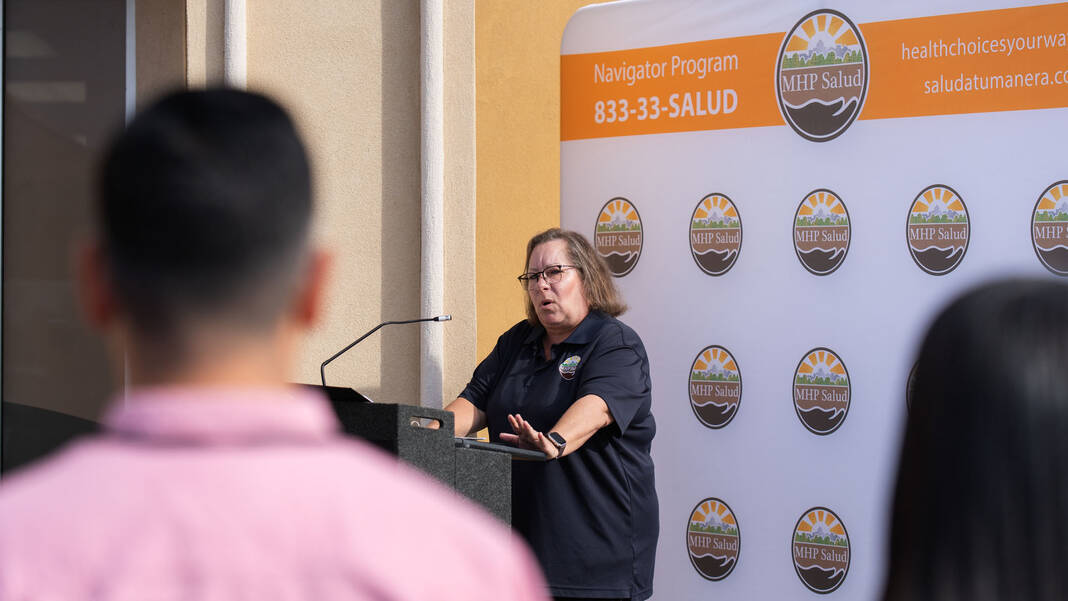
[Photos by RGV Photo + Video, Courtesy of MHP Salud]